
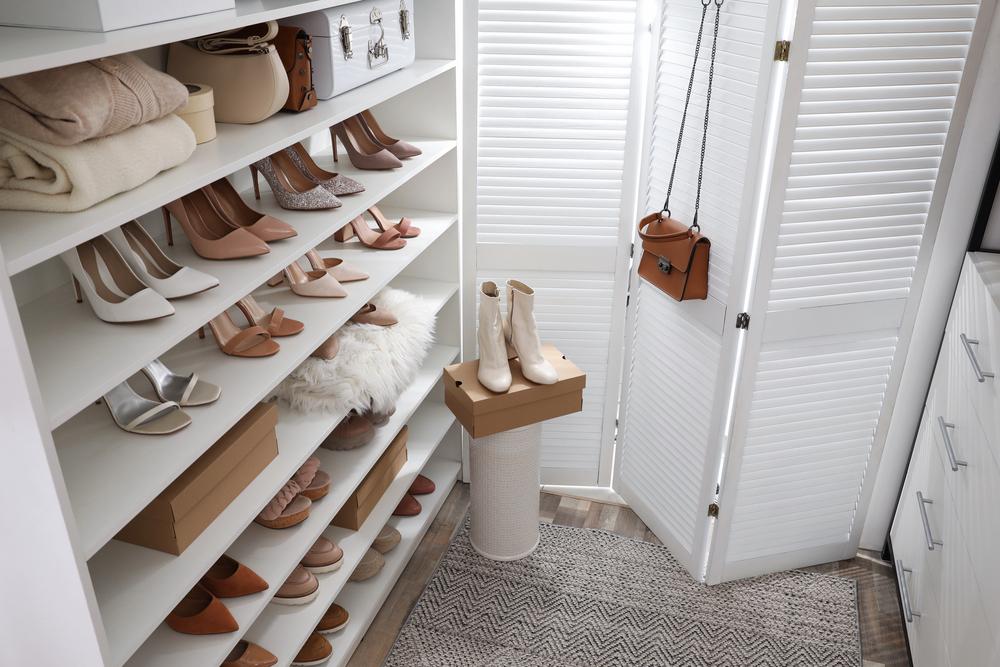
If your shoe collection seems to spread faster than you can organize it, the problem may not be how many shoes you own. The bigger issue is often where each pair belongs and how easily you can reach it.
Think about what passes through your closet in a normal week. You may have work shoes, sneakers, sandals, kids’ school footwear, sports pairs, heels, and dress shoes. Add what you only wear for special occasions, and one basic shoe rack can quickly fall short.
For an Orlando home, there is another practical concern: moisture. Florida’s warm, moist outdoor air and periods of heavy rain can bring damp footwear indoors. The Florida Department of Health notes that controlling indoor moisture is key to limiting mold growth and recommends keeping indoor humidity below 60%.
So, before picking the best shoe storage ideas, look at who uses each pair, how frequently you wear it, how quickly you need access to it, and whether it is ready to be stored.
Start With How You Actually Use Your Shoes
A good plan starts with your routine, not an empty wall. If you design around what looks neat in a photo but ignore how you get dressed every morning, clutter usually comes back.
Who Uses the Shoes?
Separate footwear by person before worrying about style. Your everyday pairs should not compete for the same space as your partner’s collection or your kids’ school shoes.
For a shared closet, you might dedicate one side to one person and another section to someone else. Kids benefit from lower shelves they can reach without help. Guest footwear can have its own small zone instead of mixing with your personal collection.
The same logic can work in a shared or commercial space. Clear ownership makes putting footwear away easier, especially when several people use the same area.
How Often Do You Wear Them?
The pair you grab five days a week deserves better real estate than something you wear twice a year.
Keep daily footwear within easy access. Weekly or occasional pairs can sit farther up or down, while formal or rarely worn footwear can move into seasonal storage.
One of the best shoe storage ideas is surprisingly simple: give your most-used footwear the easiest spots. You spend less time searching, bending, moving boxes, or pulling out several pairs just to reach one.
How Easy Should They Be to Reach?
Accessibility changes from person to person. A lower shelf may be ideal for a child but inconvenient for you if you have to crouch every morning.
Think about movement before you install anything. Frequently used footwear belongs where you can see and grab it comfortably, while less-used shoes can occupy less convenient areas.
Your closet starts working with your routine rather than asking you to change it.
Create a Shoe Storage Zone Instead of Scattering Shoes Around the Closet
Giving footwear a dedicated zone keeps it from slowly claiming unused floor space. You also gain a much clearer picture of how much storage your collection really needs.
A shoe zone might occupy a narrow wall, a run of lower shelves, or a full display section in larger walk-in closets. Couples can divide sections by user, while families may separate adult and children’s footwear.
Set a realistic capacity. Once every available corner becomes overflow storage, even a large closet can start feeling tight.
For broader whole-closet planning, Smart Closet Storage Ideas can help you coordinate footwear with clothes, bags, accessories, and other belongings instead of treating every category separately.
Best Shoe Storage Ideas for a Walk-In Closet
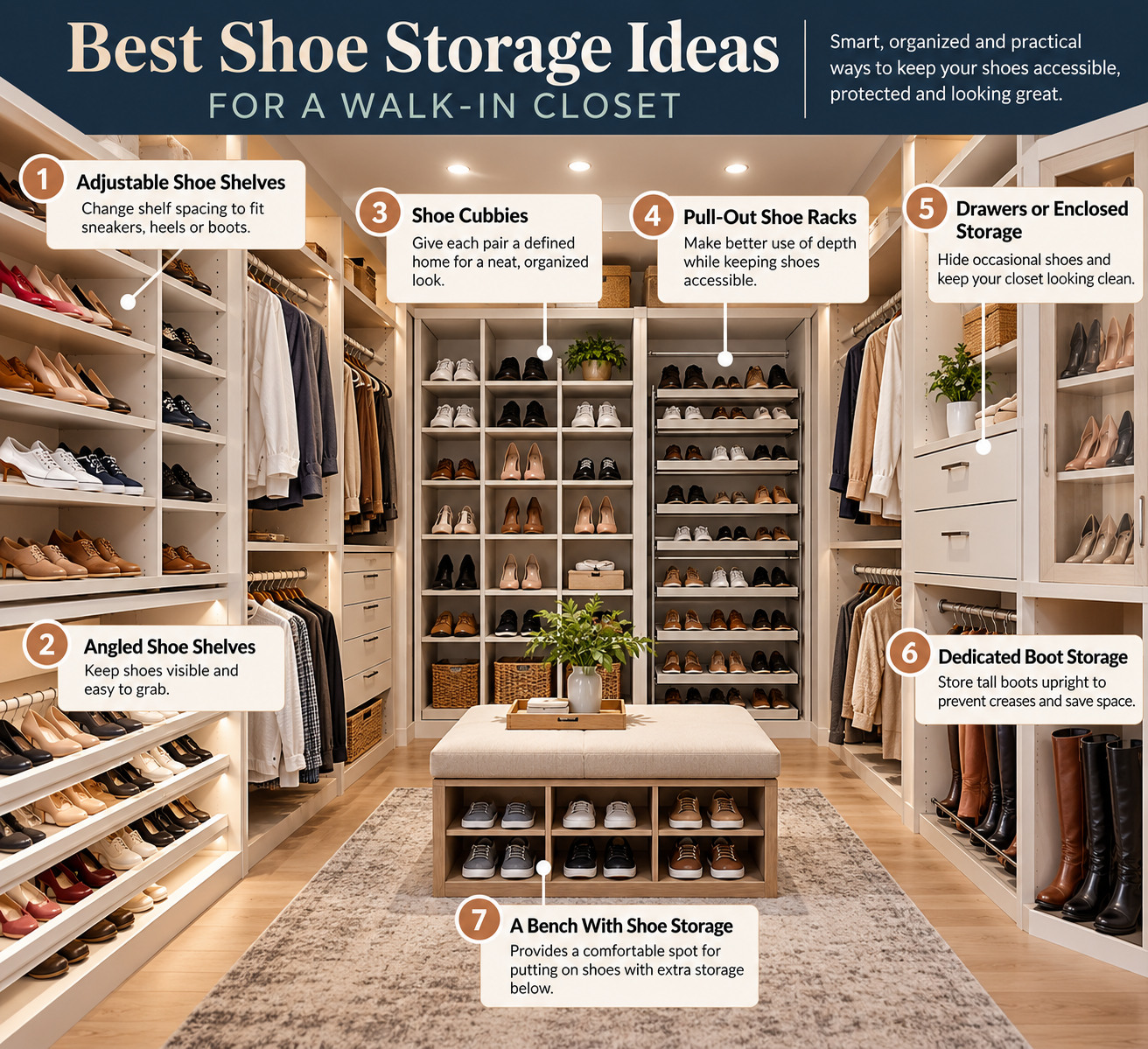
The best shoe storage ideas solve a specific problem rather than simply adding more shelves. Your collection, available square footage, and daily habits should determine which setup makes sense.
Adjustable Shoe Shelves
Adjustable shelves give you room to change shelf spacing as your footwear changes. Sneakers and flats need far less vertical clearance than tall boots.
That flexibility also prevents wasted open space above shorter footwear. If your collection changes over time, an adjustable system can adapt without requiring a complete redesign.
Angled or Flat Shelves
Angled shelves make footwear easy to see and can create a polished, high-end display. They work especially well when seeing each pair quickly matters to you.
Flat shelves, though, can be more straightforward when your priority is usable capacity. Before you decide, consider whether you value display or maximum efficiency more.
Cubbies and Pull-Out Racks
Cubbies give individual pairs a defined home. They can make organization simple, but fixed openings may become limiting if your footwear varies greatly in size.
A pull-out shoe rack can make better use of depth while keeping footwear accessible. Check the available clearance and hardware carefully so the system does not interfere with nearby drawers, hanging clothes, or doors.
Drawers and Enclosed Storage
A drawer or enclosed cabinet can hide occasional footwear and keep the closet looking calmer. Yet daily footwear should be dry before you close it away.
If moisture is a concern, prioritize air circulation rather than sealing damp shoes immediately inside a closed compartment.
Dedicated Boot Storage
Tall boots deserve their own section. Forcing them into short openings can bend shafts and waste surrounding space.
Store them upright with enough vertical clearance. A dedicated boot section also keeps bulky footwear from taking over areas meant for everyday pairs.
A Bench With Storage
If your room allows it, a bench gives you somewhere comfortable to sit while putting footwear on. Lower compartments can hold frequently used shoes without consuming another full wall.
Just protect your walking path. Extra seating should never create an obstacle in a closet that already has limited clearance.
Think About Cleanliness Before Putting Shoes Away
Clean shoe storage starts before footwear reaches the shelf. If a pair comes inside damp from rain or dirty from outdoor use, immediately hiding it in a closed cabinet can trap moisture where you do not want it.
Florida health guidance specifically identifies warm, moist outdoor air, leaks, condensation, and high indoor humidity as possible sources of indoor moisture. That makes drying wet items and controlling dampness a sensible part of closet care.
Let wet footwear dry before placing it into enclosed storage. Open or ventilated shelving can help maintain airflow, and elevated shelves keep footwear away from a damp or dirty floor.
You do not need an elaborate system. Among the best shoe storage ideas for an Orlando household is simply keeping dirty or damp daily footwear separate from clean, occasional pairs.
The result is easier cleaning and a closet where moisture management is part of the layout, not an afterthought.
Organize by Use, Not Just by Shoe Type
You do not have to place every sneaker together just because they match. Frequency of use can be more useful than category.
Think of your collection as a simple hierarchy:
- Prime storage: Everyday shoes within immediate reach
- Secondary storage: Weekly or occasional pairs on nearby shelves
- Protected storage: Special footwear kept clean and secure
- Long-term storage: Rarely used pairs in upper, lower, or seasonal storage
Suppose you own 20 pairs but regularly rotate through four. Giving all 20 equal-access space wastes the most useful part of your closet.
Your best shoe storage ideas should therefore reflect how you actually wear your collection, not just how impressive it looks when everything is lined up.
Shoe Storage for Kids Needs a Different Approach
Kids need storage they can actually use without your help. Place everyday school or play footwear on lower, accessible shelves and keep the system simple enough that putting a pair away takes seconds.
Avoid tiny fixed compartments that leave no room for growth. Children’s footwear sizes change, and an adjustable setup gives you more flexibility.
Easy-to-clean surfaces also matter when sports, playgrounds, rain, and everyday mess enter the picture. If the system is easy to use, you have a better chance of keeping footwear off the floor.
What About Guest or Shared Shoe Storage?
Guest footwear needs a clear home without taking over your personal storage. A small open section, low shelf, or a few assigned cubbies may be enough.
For a shared household, vacation property, or appropriate commercial setting, focus on clear access and easy upkeep rather than personalized display. Users should be able to tell where footwear belongs without needing instructions.
Keep walking paths open and avoid loose shoes near entrances or narrow corners. Good organization should make the space easier to move through, not merely better looking.
How Much Shoe Storage Do You Actually Need?
Count what you own before deciding how many shelves to build. More importantly, separate what you use every day from what you rarely touch.
Take inventory of everyday footwear, occasional pairs, tall boots, children’s footwear, sports footwear, and anything requiring protected or seasonal storage. Then allow some flexibility instead of designing a system that is already full on day one.
Physical dimensions matter too. Shelf width, depth, spacing, and shoe size all affect actual capacity. [INTERNAL LINK: Closet Dimensions Guide] can help you think through measurements before committing valuable closet space.
The best shoe storage ideas leave enough flexibility for your collection to change without wasting half the closet today.
When Custom Shoe Storage Makes Sense
Custom shoe storage becomes useful when standard furniture no longer fits the way you live. You may have a large collection, several family members sharing one closet, tall boots, or footwear that varies enough in size to make fixed shelving inefficient.
A custom system can coordinate adjustable shelves, drawers, hanging sections, seating, and other accessories within one planned layout. You can also use awkward corners and vertical space more intentionally.
Instead of adding another freestanding rack whenever your collection grows, you can create a custom closet designed around your wardrobe and the way you use it.
Plan Your Walk-In Closet Around the Shoes You Actually Wear
A better walk-in closet starts with four questions: Who uses the footwear? How often do you wear each pair? How easy should it be to reach? Is it clean and dry before you store it?
Answer those first. The right shelves, racks, cubbies, drawers, and storage zones become much easier to choose afterward.
The best shoe storage ideas do more than make your collection look neat. They make everyday routines easier while helping you use the closet space you already have more intentionally.
If your current setup leaves shoes across the floor or valuable shelving unused, contact Nu Kitchen Designs. They can help you turn that frustration into a walk-in closet planned around your real wardrobe and routine. As a local Orlando closet design authority, Nu Kitchen Designs can create a custom system that balances accessibility, flexibility, and practical shoe management for your home.
Frequently Asked Questions
How deep should shoe shelves be in a walk-in closet?
Your ideal depth depends on shoe size and whether the shelves are flat or angled. Measure your largest everyday footwear first, then size the shelving so heels and toes are supported without wasting unnecessary closet depth.
Is it better to store shoes on flat or angled shelves?
Flat shelves usually favor efficient use of space, while angled shelving can improve visibility and create more of a display. Your collection size and available square footage should guide the choice.
Should shoes be stored in an open or closed cabinet?
Both can work, but damp footwear should dry before going into enclosed storage. If moisture is common, open or ventilated shelving can provide better air circulation while footwear dries.
How many pairs of shoes can fit on a closet shelf?
Shelf width and the size of your footwear determine how many pairs will fit. Measure several of your widest everyday shoes side by side rather than relying on a generic number, especially if the shelf will hold a mix of adult and children’s footwear.