
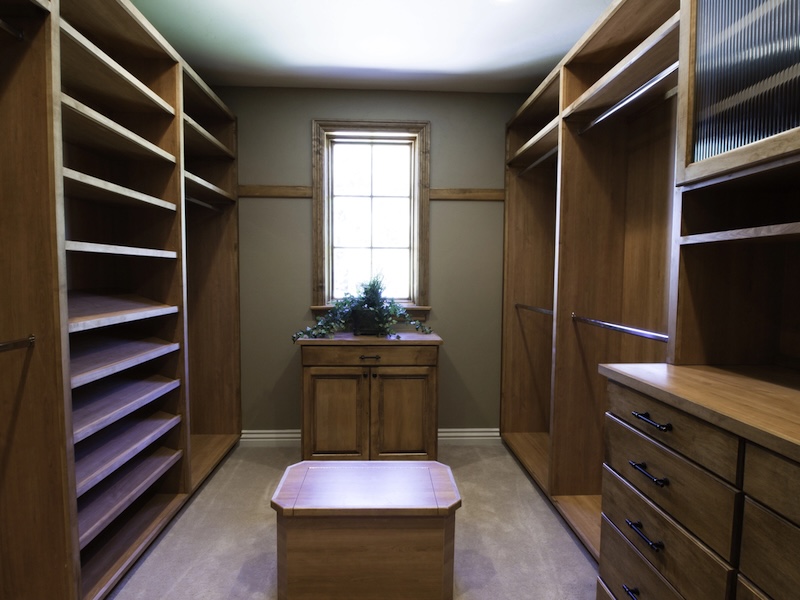
A beautiful walk-in closet isn’t so appealing when you are greeted by musty odors, damp clothes, or even mold creeping onto your favorite garments. Without enough airflow, an enclosed closet can trap heat and humidity, putting clothing, shoes, cabinetry, and other stored items at risk.
But does every walk-in closet need its own vent? Not necessarily. What your closet needs is adequate air circulation and moisture control. Depending on its size, location, surrounding rooms, and your home’s existing HVAC system, that could mean something as simple as improving passive airflow or, in some cases, incorporating the closet into a properly designed heating and cooling system.
This is especially true down here in Central Florida, where high humidity can make enclosed storage spaces harder to keep dry. If you know what signs to look for and which fixes are actually worth your time, you can protect your wardrobe without adding ventilation you may not need.f
Why Good AirFlow Matters in a Walk-In Closet
Even when a walk-in closet doesn’t need a dedicated vent, it still needs a way to avoid becoming a closed-off pocket of warm, humid, or stale air. Good airflow helps manage moisture, reduce lingering odors, and create better conditions for the clothing and other items you store inside.
Preventing Moisture Buildup
Moisture becomes a concern when humid air enters a closet and has little opportunity to escape or dry out. The risk can be greater in closets near bathrooms, laundry areas, or other moisture-prone spaces.
Improving airflow can help moisture dissipate instead of staying on walls, shelving, fabrics, and other surfaces. However, airflow is only part of moisture control. If a closet has persistent dampness, condensation, or visible mold, identify the moisture source rather than relying on ventilation alone.
Controlling Odors and Stale Air
Walk-in closets can hold odors simply because the door stays closed for long periods. Shoes, worn clothing, laundry hampers, and other stored items can make stale air more obvious.
Allowing air to circulate between the closet and the rest of the conditioned space can reduce that closed-up feeling. It also makes the closet more comfortable to use, especially if you spend time inside getting dressed or organizing your wardrobe.
Protecting Clothing and Personal Items
Clothing isn’t the only thing affected by prolonged dampness. Handbags, leather goods, fabric storage bins, and closet cabinetry can also suffer when moisture remains trapped in an enclosed space.
Keeping reasonably dry and allowing air to move through the space creates better closet storage conditions for these items. When planning custom closets, airflow should be considered alongside shelving, cabinetry, hanging space, and other storage features. For valuable or delicate pieces, controlling moisture is particularly important because some materials are more sensitive to damp conditions than others.
Signs Your Walk-In Closet Needs Better Ventilation
Airflow and moisture problems often show up before serious damage occurs. Pay attention to changes in how your closet smells and feels, as well as the condition of the surfaces and belongings inside it.
Musty or Stale Odors
If your closet smells stale or musty after the door has been closed for a while, air may not be circulating well through the space. Shoes, laundry hampers, and worn clothing can contribute to odors, but a persistent musty smell may also point to excess moisture that needs attention.
Visible Mold or Mildew
Mold or mildew on walls, ceilings, shelving, or other surfaces is a stronger warning sign. While improving airflow may be part of the solution, visible growth shouldn’t simply be treated as a ventilation problem. You’ll also want to identify where the excess moisture is coming from so the problem doesn’t keep returning.
A Damp or Humid Feeling
Your closet shouldn’t consistently feel clammy or noticeably more humid than the adjoining room. If it does, check whether humid air is entering from a nearby bathroom, laundry area, exterior wall, or another moisture source. This is especially worth watching in Central Florida, where outdoor humidity can make moisture management more challenging in enclosed areas of the home.
Clothing Damage or Discoloration
Pay attention to spotting, mildew odors, or other moisture-related changes on clothing and stored belongings. Leather goods, shoes, handbags, and delicate fabrics can be particularly sensitive to prolonged damp conditions.
If you’re seeing these symptoms along with musty odors or visible moisture, the issue deserves more than a quick fix. The next step is determining whether better passive airflow, HVAC adjustments, humidity control, or another solution is appropriate for the space.
Best Ventilation Options for Walk-In Closets
The right solution depends on why your closet feels stuffy or damp in the first place. Some closets simply need better air exchange with the adjoining room, while others may need changes to the home’s heating and cooling system or better humidity control.
Passive Ventilation Solutions
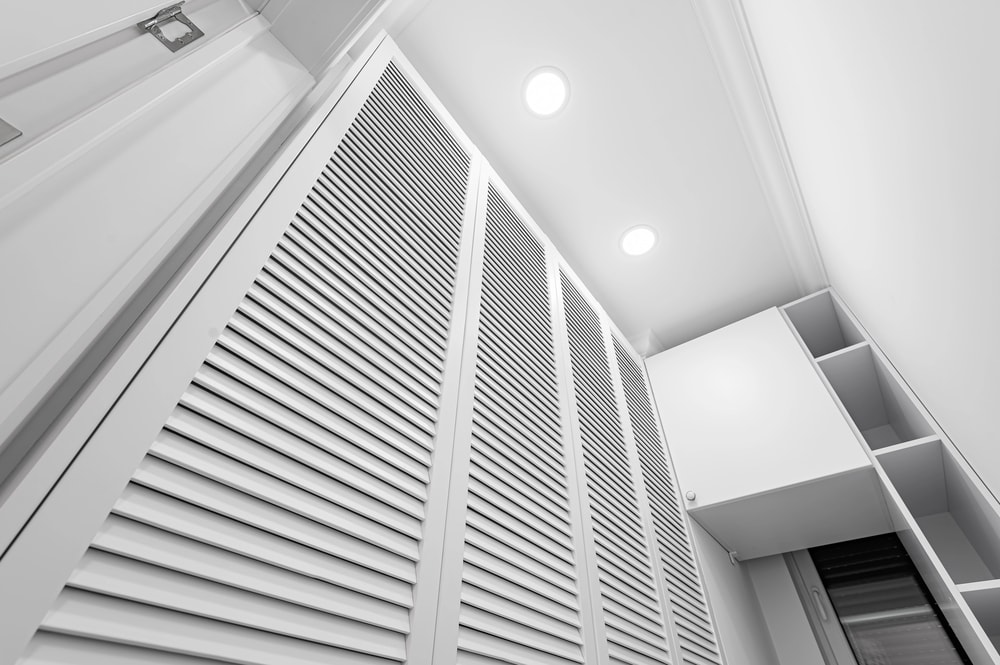
Passive ventilation allows air to move between the closet and surrounding conditioned space without using a dedicated fan. This can be enough for some smaller closets when the adjoining room already stays comfortable and dry.
Common options include:
Option | How It Helps Your Closet |
Louvered Doors | Slatted openings allow air to move between the closet and adjoining room even when the door is closed. |
Transfer Grilles or Vents | Openings installed in a door or wall can provide another path for air to circulate between connected spaces. |
These solutions can often be incorporated without sacrificing much storage space. However, passive airflow won’t correct an underlying moisture problem if humid air is entering the closet from another source.
Active Ventilation and HVAC Solutions
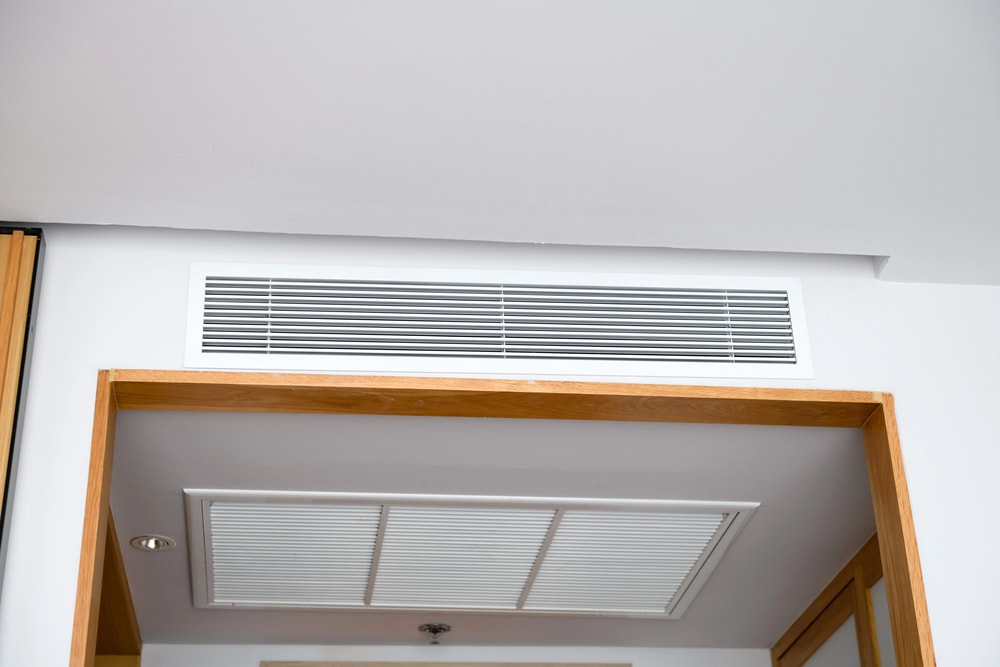
Some walk-in closets may need more than passive airflow, particularly when the space is large, enclosed, noticeably warmer than adjoining rooms, or consistently humid.
An HVAC professional can determine whether the closet should be incorporated into the home’s conditioned-air system and whether the existing system can support that change. The goal isn’t simply to blow more air into the closet. Air also needs an appropriate path to move through or leave the space.
A dedicated exhaust fan may be appropriate in certain designs, but it shouldn’t be treated as the default fix for a humid closet. Exhausting air changes how air moves through the surrounding rooms, so the overall HVAC and moisture conditions should be considered before adding one.
What About a Dehumidifier?
If excess humidity is the main problem, increasing airflow may not address the cause by itself. A dehumidifier can help manage moisture in some situations, but persistent humidity should first be investigated to determine whether it comes from the home’s HVAC performance, air leakage, a nearby moisture source, or another issue.
The most effective solution is the one that addresses the actual cause rather than simply adding another vent or fan.
Why Professional Planning Matters
Ventilation is easier to address when it’s considered as part of the closet design rather than after shelving, cabinetry, and hanging areas are already installed. A vent or grille placed behind built-ins, for example, may not function as intended and can be difficult to correct later.
During the planning process, your closet designer can account for existing vents, doors, walls, cabinetry, and storage features so they work together instead of competing for space. If changes to the home’s HVAC system are needed, a qualified HVAC professional can evaluate airflow, system capacity, and the appropriate placement of supply or return air paths.
Planning these details early also makes it easier to integrate functional elements without compromising the finished look of your closet.
Key Considerations: Closet Size, Home Layout, and Climate
Before deciding that your closet needs a vent, consider how the space fits into the rest of your home. The right solution can depend on the closet’s size, location, surrounding rooms, and existing heating and cooling system.
Closet Size and Layout
A smaller walk-in closet that regularly exchanges air with a conditioned bedroom may have different needs than a large dressing room with floor-to-ceiling cabinetry and a door that stays closed most of the day.
The type of storage you’re planning matters, too. A walk-in creates an enclosed room, while built-in storage becomes part of an existing room. If you’re still deciding between the two, comparing a walk-in closet vs. built-in closet can help you understand how each configuration uses your available space.
Location Within Your Home
Pay attention to what’s on the other side of the closet walls. A closet next to a bathroom, laundry area, exterior wall, or other moisture-prone space may require more attention than one surrounded by conditioned interior rooms.
Also consider existing HVAC vents and return-air paths before installing cabinetry. You don’t want new shelving or built-ins blocking airflow that the room already relies on.
Central Florida’s Humid Climate
Humidity deserves particular attention in Central Florida. When outdoor air is warm and humid, simply bringing in more outside air isn’t always the answer. Your home’s air conditioning and moisture-control strategy play an important role in keeping indoor spaces comfortable and dry.
A small humidity gauge can help you determine whether the closet actually has a moisture problem instead of relying on how the room feels. If humidity remains high despite normal air conditioning, or you repeatedly notice condensation, dampness, or mold, investigate the source rather than assuming another vent will solve it.
Keep Your Walk-In Closets Fresh and Healthy
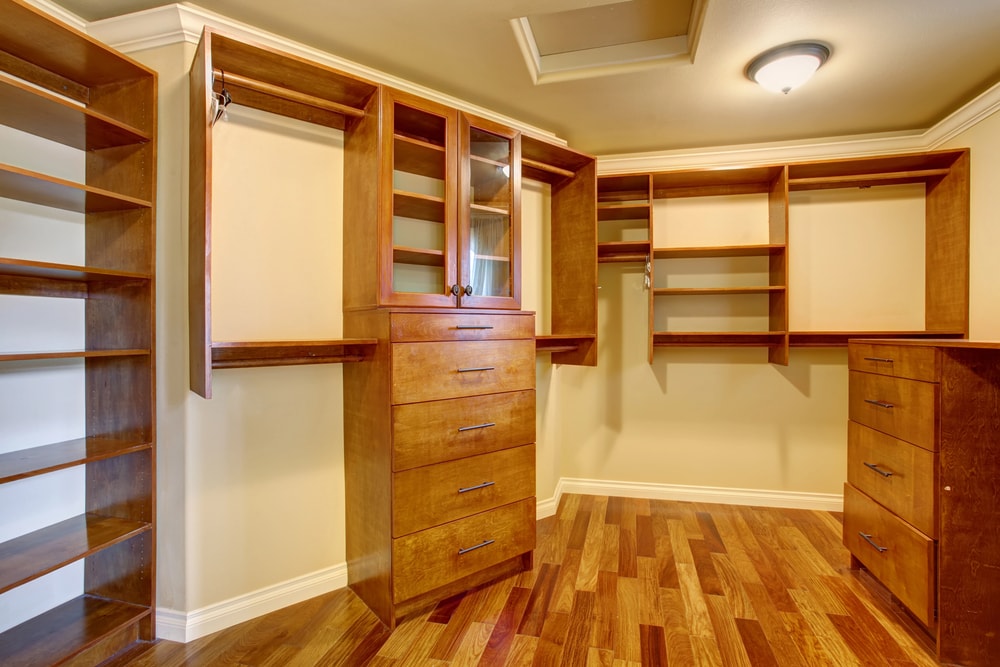
A walk-in closet doesn’t automatically need a dedicated vent, but it does need conditions that keep excessive moisture and stale air from becoming persistent problems. Sometimes, better air circulation is enough. Other situations call for humidity control, HVAC evaluation, or correcting an underlying moisture source.
If you’re planning a new closet, thinking about these details before the cabinetry goes in can prevent compromises later. Nu Kitchen Designs can help you plan a custom closet around your available space, storage needs, and existing room conditions.
Ready to create a closet that works as well as it looks? Contact Nu Kitchen Designs to start planning your custom closet.