

Walk into an older Winter Park bungalow or a brand-new build in Lake Nona, and the problem is usually the same. The builder checked a box, but they didn’t plan for your actual life. You go to slide the closet door shut and, thud, it hits a coat sleeve. Every single morning. It’s infuriating. That’s closet depth working against you. It’s a hidden tax on your time and, eventually, your resale value when a buyer realizes they can’t actually fit a suit in the master. Most people just buy more bins. Don’t do that. Bins won’t fix a wall that’s three inches too shallow or a reach-in that’s so deep it’s basically a dark cave.
Let’s diagnose the space before you waste money on the wrong solution.
Why Closet Depth Problems Are Common in Florida Homes
In Central Florida, many builders prioritize speed to market over how you actually live. If you’re in an older Orlando bungalow, you’re likely fighting reach in closets that feel more like narrow slits in the wall than storage space. Then you have the newer Winter Park renovations where someone tried to get clever, adding more depth without a plan, turning a walk in closet into a dead zone where out of season items go to be forgotten. It’s the same story: the square footage is there, but the closet design is off. They give you standard depth on paper, but ignore door clearance or the fact that a standard closet in a 1950s floor plan wasn’t meant for modern wardrobe closets. It’s a common pitfall, assuming more room automatically means better storage.
What Happens When a Closet Is Too Shallow
In those tight Orlando bedroom footprints, closet depth is usually the first thing sacrificed to make the room look bigger on a floor plan. But once you move in, the physics just don’t work. Here’s what happens when you’re missing those crucial inches:
- The Hanger Struggle: Your hanging clothes don’t actually hang freely. They’re constantly brushing against the back wall or getting pinched by the sliding doors.
- Door Failure: You lose your door clearance. You find yourself doing the “shoulder tuck”, manually pushing every suit jacket back just so the door can glide past without snagging a sleeve.
- Shelf Conflict: If your closet shelves are too deep for the frame, they hit the hangers. You end up with a mess because there isn’t enough room for both a rod and a stack of folded clothes.
- Visual Chaos: Because nothing fits quite right, the closet always looks like a disaster. Even with smart design, a shallow space feels like a dumping ground because you’re forced to overlap items just to get them inside.
Without that sweet spot of standard depth, you’re not just short on storage space. You’re losing time every morning fighting your own wardrobe.
What Happens When a Closet Is Too Deep

Think more space is always better? Not when it comes to closet depth. In those high-end Winter Park remodels, homeowners often trade usable bedroom floor for a closet that’s way too deep. It sounds great until you’re digging through a dark cavern.
- The Black Hole: Without good lighting, the back of the closet becomes a dumping ground for seasonal items and cleaning supplies you’ll never see again.
- Accessibility Fail: If you have to move three storage bins just to reach your winter coats, the layout is broken. You lose easy access to everything.
- Wasted Footprint: You’ve sacrificed ample room in your master suite for “extra” square footage that just collects dust.
- Shelf Issues: Using the same depth for upper shelves as the floor makes the top of the closet a graveyard for bulkier items.
A dream closet isn’t about sheer volume. It’s about the right depth for what you actually own.
Why Closet Depth Issues Show Up During Remodels
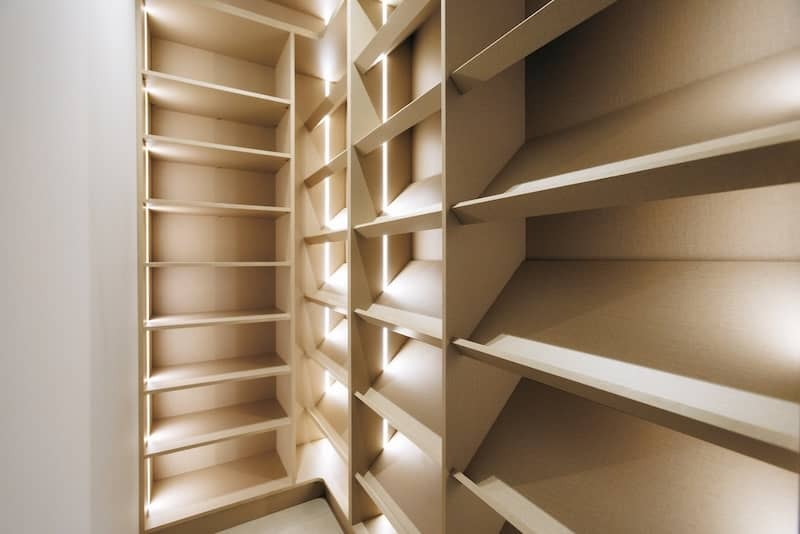
Remodeling in Central Florida is a game of “work with what you’ve got.” In older Orlando homes, you’re often fighting the original slab or load-bearing walls that refuse to budge. You want a custom closet, but the existing framing forces a compromise.
Maybe you try to squeeze in double hanging rods, but the door style or a weird corner creates tight spaces where you can’t actually reach the clothes. It’s a common story in Winter Park: trying to modernize a 1920s layout while preserving the home’s character. You end up with closet space that looks nice on a sketch but fails in reality because the depth doesn’t align with how modern wardrobes are actually used. Maximizing storage requires more than just slapping in closet shelves. It takes a smart design that respects the home’s bones.
How Closet Depth Affects Daily Reach and Accessibility
An arm only reaches so far. In Florida homes, where planning for multi-generational living or aging-in-place is common, ergonomics is everything. If the closet depth is off, the result is either bending at awkward angles or straining to see into dark corners. Good lighting helps, but it won’t fix a shelf that’s too deep to reach comfortably.
For a clutter-free home that actually works long-term, consider the “strike zone”. The space between hips and shoulders where easy access is guaranteed. Whether hanging long dresses or storing bulkier items, the layout must accommodate different heights and mobility levels.
A perfect closet isn’t just about maximizing storage. It’s about ensuring that everyone, from kids to grandparents, has enough space to reach what they need without a struggle.
Can Closet Depth Problems Be Fixed Without Rebuilding?
Yes. It is entirely possible to fix a broken closet without tearing down drywall. For many Orlando homeowners, the goal is a big difference without a massive construction bill. The trick is working creatively with the inches deep already available:
Optimize the Rods
Swap out a single high bar for double rods. If the closet depth is shallow, shifting the rod slightly forward or backward can sometimes provide just enough door clearance to stop the snagging.
Swap the Shelving
If shelves are too deep, they create dark “dead zones.” Replacing them with shallow shelves or specialized shoe racks prevents that “black hole” effect where items disappear.
Utilize Pull-Out Accessories
For a deep closet, use drawers or pull-out bins. These bring the clothes to you, making it life easier to reach the very back without digging.
Adjust Shelf Height
Use higher shelves for seasonal items and lower vertical space for daily essentials. Matching shelf depth to the specific item, like shorter depths for folded clothes, reclaims valuable storage space.
Change the Door
Sometimes, the door style is the bottleneck. Switching to bifold or barn doors can open up extra space that was previously blocked by a swinging door’s arc.
When Closet Depth Limitations Call for a Custom Solution
Sometimes, off-the-shelf kits just can’t hack it. In those unique Winter Park remodel projects, a custom closet is often the only way to stop the morning headache. Pre-sized freestanding units rarely align with the odd inches deep found in older homes, leading to wasted gaps and a space that still feels cramped. A smart design bypasses this by mixing different closet types within one footprint. Think deeper shelves at the base for bulkier items and shallow shelves at eye level to keep things clutter free. While the upfront cost is higher than a wire rack, the tradeoff is a perfect closet that actually respects the room’s bones. It’s an investment in solving depth problems where off-the-shelf systems fail to provide enough space for a modern wardrobe.
How to Know If Closet Depth Is the Real Problem
If a space stays messy no matter how many times it’s organized, the issue isn’t a lack of discipline. It’s the closet depth. You can buy every storage bin in Orlando, but they won’t fix a rod that’s too close to the door. Look for these red flags:
- Hangers sitting at an angle just to let the door close.
- Hanging clothes getting crushed against the back wall.
- A “hidden” graveyard of seasonal items in the dark back corners of a deep reach-in.
Florida buyers are savvy; they notice these functional flaws during home inspections and resales. When shoe racks block the walkway, or hanging rods feel like a tight squeeze, the footprint is the failure. A professional design evaluation identifies these structural gaps before more money is wasted on temporary fixes.
Turning Closet Depth Frustration Into a Functional Fix
At the end of the day, closet depth issues are structural, not cosmetic. No amount of color-coordinated hangers can fix a wall that’s physically in the way. Diagnosing these spatial gaps first is the only way to stop the cycle of wasted spending on organizers that don’t fit.
Whether you are battling a shallow reach-in in an Orlando bungalow or a deep, dark cavern in a Winter Park remodel, the goal is a layout that works with your life, not against it. Before you commit to a full-scale construction project or buy another useless bin, talk to Nu Kitchen Designs. Explore a design-based solution that prioritizes ergonomics and flow. It’s about getting the bones of the space right so your home finally feels as functional as it looks.