

A closet can make your morning easier or turn it into a daily hunt for shirts, shoes, and bags. If your present setup feels cramped, messy, or hard to use, the real problem may not be how much you own. It may be that your closet no longer fits your storage needs.
Choosing the best closet type starts with how you use your space, not with what looks impressive in a photo. A large walk-in can be a great fit for one home, while a smart reach-in closet may work better in another.
In Orlando, room size, humidity, and how much permanent construction makes sense all affect the choice. The right setup should make your life easier without wasting square footage.
How Do You Choose the Best Closet Type?
You choose the best closet type by matching your daily routine, wardrobe, and available space to the way each system works. Start with function first. Looks matter, but a beautiful setup will still frustrate you if it does not fit the way you store clothes, shoes, and accessories.
Look at what causes trouble now. Maybe long garments drag over lower shelves, shoes pile up, or one person uses most of the hanging rods. Those pain points reveal what the new system must fix.
The best closet type should also fit your long-term plans. If you expect your wardrobe to grow, if two people share the same bedroom, or if you plan to stay in the house for years, a flexible system featuring adjustable shelves can protect you from having to redo the entire closet project later.
Walk-In Closets: Best for More Storage and Easier Access
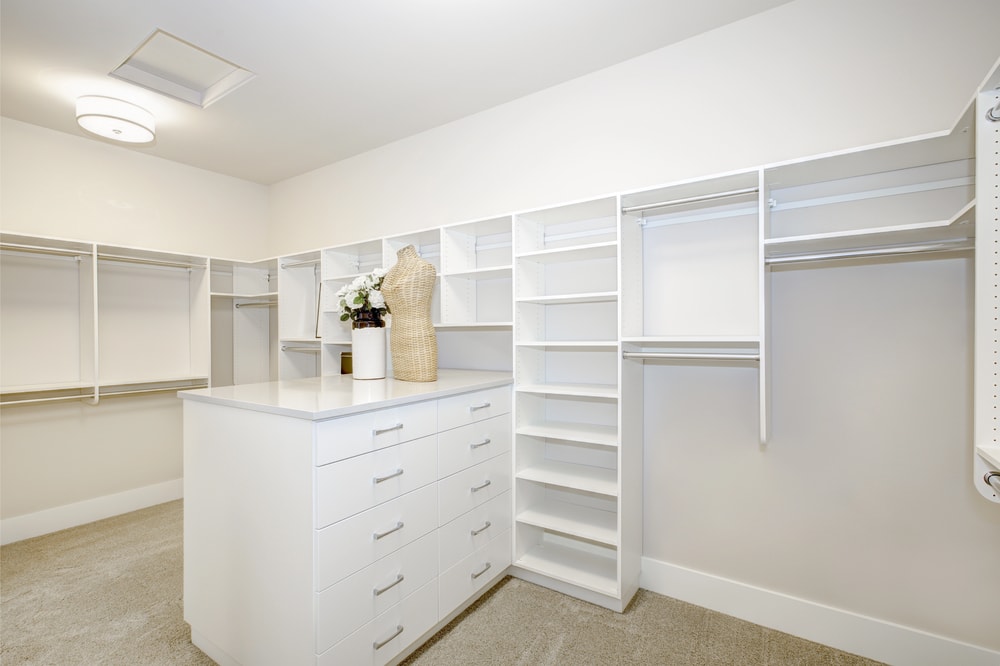
A walk-in closet gives you room to step inside, see more of your wardrobe at once, and organize different categories without crowding them together. If you need ample storage space and want a more comfortable dressing routine, this option may suit you well.
The main advantage is visibility. You can separate long clothing, folded sweaters, shoes, bags, and smaller items instead of stacking everything behind one door. A thoughtful walk-in closet design can include drawers, double hanging areas, pull-out shoe racks, and full-length mirrors.
If you have enough space, a center island can add folded storage or a landing spot for accessories. A larger layout may also function as a small dressing room.
But size alone does not make a walk-in useful. Poorly placed shelves or narrow aisles create new clutter. In Florida, closets near bathrooms or exterior walls can face higher humidity, so airflow and material endurance matter.
If you are deciding between a walk-in and a permanent built-in system, compare the two before you commit. Our guide to walk-in closet vs. built-in closet will help you weigh the tradeoffs.
For many larger homes, the best closet type is the one that gives you enough room to move without turning useful floor area into empty space.
Reach-In Closets: Best for Efficient Use of Smaller Rooms
A reach-in closet works well when you need strong organization without giving up much floor area. You open the front, reach what you need, and keep most storage within arm’s length.
It works well in a smaller bedroom, guest room, hallway, or linen closet. With the right space-saving design, even a shallow closet can hold more than you expect.
Use the full height. Stacked hanging zones, upper shelving, shoe storage, and drawers can keep your clothes organized. A well-planned built-in closet uses far less square footage than a walk-in.
You should also separate the idea of reach-in from built-in. A reach-in describes how you access the closet. Built-in describes storage that is permanently installed into the room or wall. Keeping that distinction clear helps you compare systems based on function instead of labels.
If your room is tight, the best closet type may be a reach-in with better internal planning rather than a larger closet that forces you to sacrifice usable living area.
Wardrobe Closets: Best When Flexibility Matters
A wardrobe works best when you want storage without committing to major construction. It can be freestanding, partially built in, or designed to look like part of the room.
You may prefer it in an older home, guest room, or property where permanent changes are not practical. A wardrobe can hold clothing, folded items, and shoes while acting like furniture.
The tradeoff is capacity. You usually get less storage space than a full walk-in, and a bulky unit may compete with a dresser, bed, or walking path.
Still, the best closet type is not always the largest one. If flexibility matters more than maximum capacity, a wardrobe can be the better best decision for your lifestyle.
Walk-In vs. Reach-In vs. Wardrobe: Quick Comparison
You can narrow your choice by comparing how each option uses space and how permanent you want the solution to be.
|
Factor |
Walk-In |
Reach-In |
Wardrobe |
|
Best for |
Larger wardrobes and shared storage |
Smaller rooms and efficient organization |
Flexible or non-permanent storage |
|
Space needed |
High |
Low to moderate |
Varies by unit |
|
Customization |
Very high |
High |
Moderate |
|
Access |
You step inside |
You access from the front |
You access from the front |
|
Permanent |
Usually |
Usually |
Not always |
|
Main advantage |
Capacity and visibility |
Efficient use of space |
Flexibility |
Dimensions still matter. A layout that works on paper may feel tight once doors, aisles, and hanging depth are added. Review our guide to closet dimensions for different rooms before you finish the plan.
How to Decide What Fits Your Home
Your choice becomes easier once you answer a few practical questions about your room and routine.
Measure the Space You Can Actually Use
Measure wall width, depth, ceiling height, doors, windows, vents, and nearby furniture. You still need clearance to open doors, walk comfortably, and reach storage.
Decide What You Need to Store
Count long garments, folded items, shoes, bags, and accessories. If your storage requirements already feel tight, leave room for future needs.
Think About How You Get Ready
If you like to see everything at once, a walk-in may feel easier. If you want quick access without entering another room, a reach-in may suit your routine better.
Decide How Permanent the Solution Should Be
A custom built-in becomes part of the room. A wardrobe gives you more freedom to move or replace it later. Match the choice to how long you expect to stay and how much change you want.
Once you know those points, the right direction usually becomes clear.
What Comes After You Choose the Closet Type?
Once you choose the layout, materials, hardware, shelving, and accessories determine how durable and useful the finished space feels.
For a walk-in, review the top materials for walk-in closet cabinets before deciding where to invest.
In Orlando, moisture resistance still needs real attention. A finish still needs to hold up to warm, humid conditions and daily use.
Build a Closet Around the Way You Live
You do not need the biggest closet. You need one that fits your room, your wardrobe, and the way you move through your day.
Nu Kitchen Designs helps you plan custom closets around your actual storage needs, not a one-size-fits-all template. You can shape the layout around hanging space, shelving, drawers, shoes, accessories, and the room you already have.
If you want a well-organized closet that feels easier to use every day, the right design starts with a clear plan. Once your home is set up the way you actually live, it stops being a struggle and just starts making things easier.
Frequently Asked Questions
Which type of closet is best?
It all comes down to your space. A walk-in is great if you have the room and want to see everything at a glance. Working with a smaller bedroom? A reach-in keeps things neat without eating up floor space. And if you’re renting or want to avoid permanent construction, a standalone wardrobe gives you more flexibility.
Which closet system is the best?
The one that actually fits your stuff. Skip the cookie-cutter setups and look for a layout with the right mix of hanging space, shelving, drawers, and shoe storage. If you want to get the most out of your space, custom systems let you tailor every inch around your wardrobe and daily routine.
What is the most efficient closet design?
Smart design uses your floor-to-ceiling space without burying your stuff. Go for adjustable shelving, double hanging rods, and dedicated shoe storage where they make sense. The trick isn’t cramming in more features. It’s making sure every section actually has a job to do.
What are common closet design mistakes?
-
Skipping the tape measure before buying or building.
-
Wasting vertical space near the top.
-
Building shelves for clothes you don’t own just because they look nice.
-
Ignoring how you’ll actually move and reach your things on a busy Tuesday morning.
A closet can look beautiful on paper and still be frustrating to use. Your daily routine should drive the layout.
What is the best material for a closet?
That depends on your budget and how much daily wear and tear it’ll see. If you live somewhere humid like Florida, you’ll also want materials that can handle moisture and stay sturdy over the long haul.